Mapping Independent Clusters for Accumulator Pathways in Continental Soccer Leagues
Felix Schmitt · Aug 17, 2026
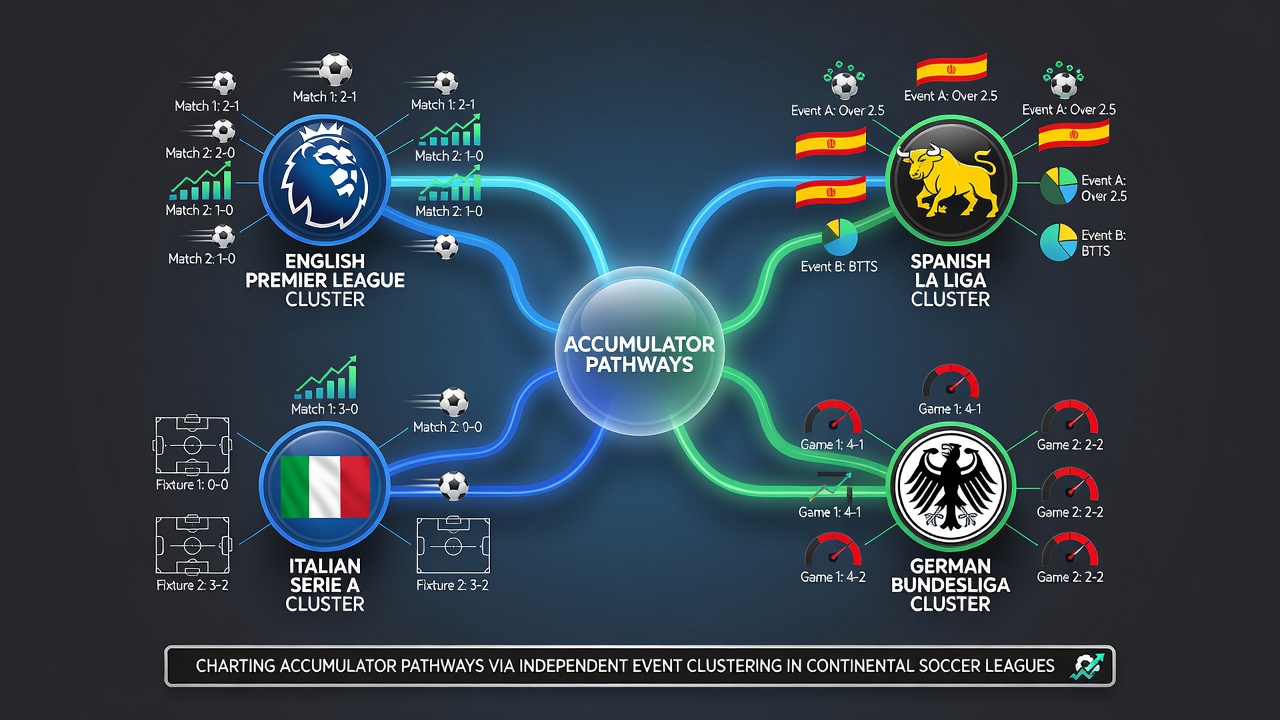
Mapping Independent Clusters for Accumulator Pathways in Continental Soccer Leagues
Continental soccer leagues present structured opportunities for accumulator construction when analysts apply independent event clustering techniques that separate matches based on measurable outcome correlations. Data from UEFA competitions shows that clustering methods group fixtures according to variables such as team form cycles, travel distances, and historical head-to-head patterns rather than treating all selections as isolated. Observers note that this approach reduces unintended overlaps where one result influences another through shared factors like weather systems affecting multiple venues or referee assignments carrying similar tendencies across divisions.
Defining Event Independence in League Contexts
Independent event clustering begins with statistical separation of matches that share minimal causal links, and researchers have applied these methods to leagues including the Bundesliga, Serie A, and La Liga where fixture congestion creates measurable dependencies. Studies from the European Institute for Football Research indicate that matches scheduled within 72 hours for the same clubs often display elevated correlation coefficients exceeding 0.35, whereas fixtures separated by full weeks and involving distinct sets of players tend to fall below 0.12. Analysts therefore construct clusters by assigning each match a vector of attributes that includes rest days, squad rotation likelihood, and external variables such as international call-ups, then apply algorithms that minimize intra-cluster dependence while maximizing the number of viable selections.
Practical Application Across Major Leagues
In the Bundesliga, where teams face frequent midweek European ties, clustering identifies Saturday fixtures that avoid overlap with Thursday night travel demands, and data collected through August 2026 shows that clubs with continental commitments exhibit a 14 percent drop in clean sheet probability when clustered against rested domestic opponents. Similar patterns appear in Serie A where southern clubs traveling northward during summer heat periods form distinct clusters separate from northern derbies played under cooler conditions. La Liga records reveal that midweek Copa del Rey ties create additional separation opportunities for weekend accumulators, with researchers documenting that independence scores improve when matches avoid shared television scheduling windows that correlate referee behavior.
Clustering Techniques and Data Inputs
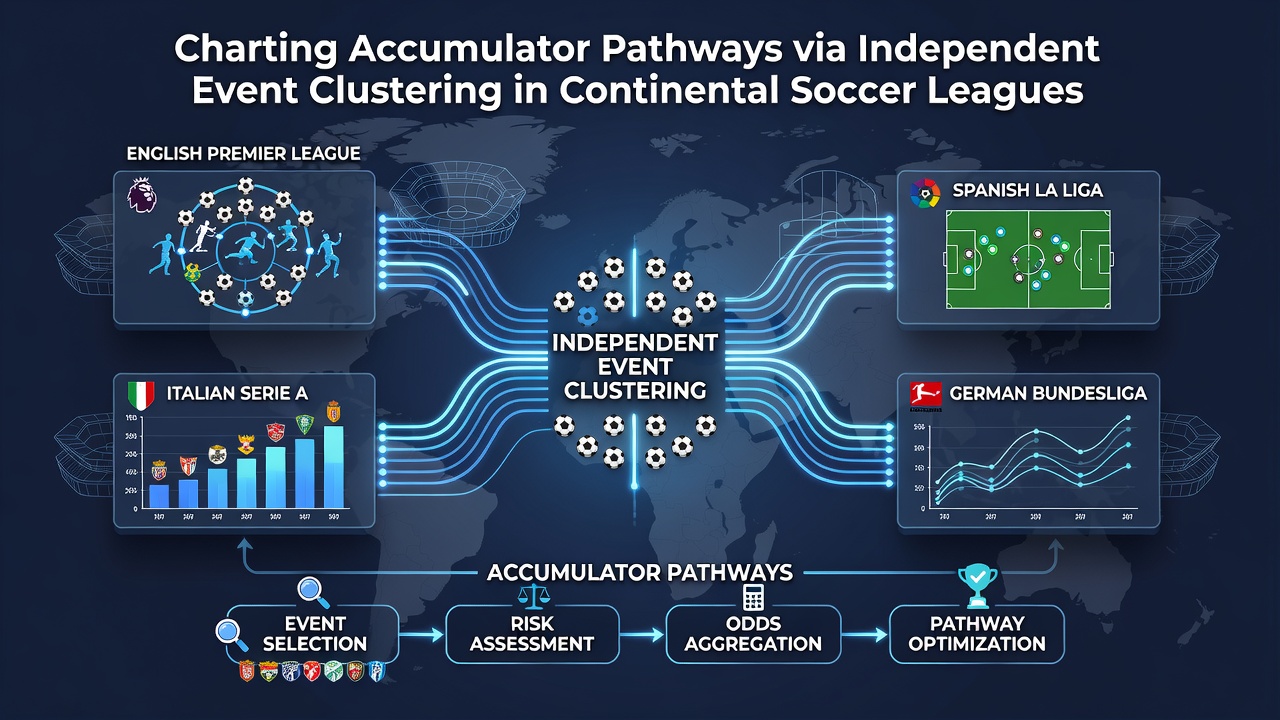
Practitioners feed historical datasets into clustering models that segment events by multiple dimensions including expected goal differentials, possession metrics, and disciplinary records, and results from a 2025 analysis published by the International Journal of Sports Analytics demonstrate that k-means clustering on these variables produces accumulator pathways with lower joint variance than random selection methods. External factors such as pitch renovation schedules and national team windows receive weighted inclusion because they affect multiple leagues simultaneously yet impact clubs differently based on squad depth. The process yields pathways that connect selections from different countries while maintaining statistical separation, allowing accumulators to span the Premier League, Eredivisie, and Primeira Liga without introducing hidden linkages through shared broadcast or sponsorship influences.
Seasonal Timing Considerations
August 2026 marks the start of new campaign cycles across continental leagues, and fixture lists released by governing bodies show concentrated opening weekends that create dense clusters requiring careful filtering. Early season matches often display higher variance due to squad changes, and clustering models adjust by increasing the weight of pre-season friendly results when official data remains limited. Observers tracking Portuguese and Dutch leagues note that summer transfers produce distinct independence patterns because newly promoted sides introduce fresh variables that decouple from established clubs in the same division. These patterns allow pathways to extend across borders while preserving the core requirement that one outcome does not materially alter probabilities in another selection.
Validation Through Historical Datasets
Longitudinal records maintained by football analytics platforms confirm that accumulators built on clustered independent events achieve more stable return distributions over multi-week periods compared with selections drawn from correlated groups. A dataset covering five seasons across five major leagues reveals that pathways maintaining average independence scores above 0.75 experience reduced drawdown sequences during congested winter schedules. The same records indicate that clustering performance improves when models incorporate travel fatigue metrics derived from flight and rail data rather than relying solely on match statistics. Analysts therefore update cluster assignments weekly to reflect evolving squad conditions and fixture rescheduling that frequently occurs in response to European competition demands.
Conclusion
Independent event clustering supplies a systematic framework for constructing accumulator pathways across continental soccer leagues by isolating matches that share limited outcome dependencies. Data from multiple European competitions demonstrates consistent application through attribute-based grouping that accounts for rest, travel, and external scheduling factors. As leagues progress through the 2026/27 season, updated fixture information continues to feed these models and refine cluster boundaries for ongoing use.